
Reading César Aira
Or how to renew one's faith in literature

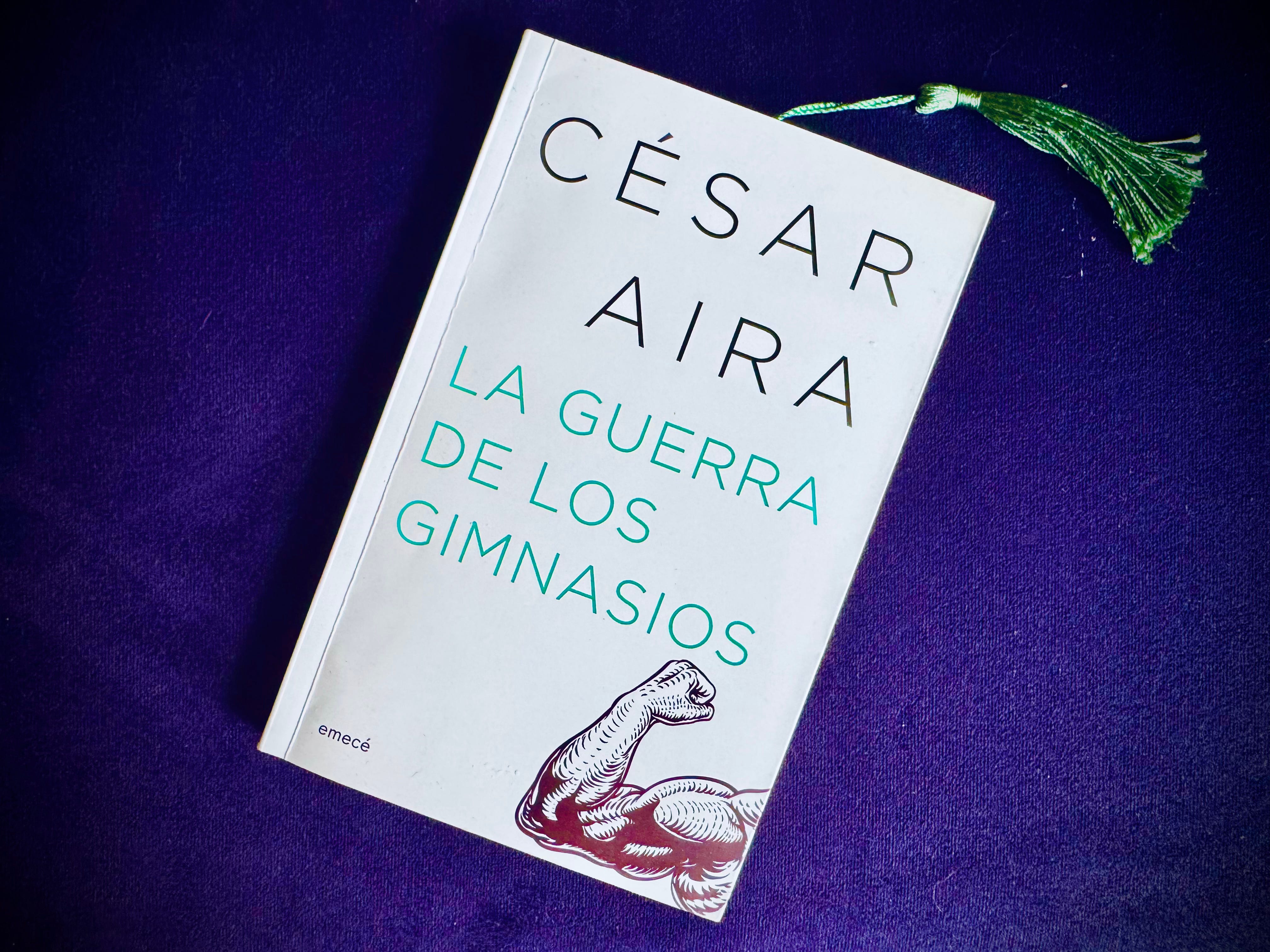
There is a recurring joke among readers of César Aira: betting on which page he’ll ruin a novel. This is a tongue-in-cheek reference to Aira’s method of writing: A “flight forward” that sometimes lands the reader in unexpected places, but that other times can turn excessively whimsical, if not outright ridiculous. Reading Aira entails accepting his rules — there’s no way around this — and that’s a concession I’m willing to make. When I pick up one of his books, I know for a fact that I’ll have fun; but I’m also aware that there’ll be a moment when I’ll feel like punching him in the nose. This is because Aira is a writer both in love with fiction and with dismantling his readers’ suspension of disbelief. In other words, his stories, one way or another, eventually remind you that you are reading something made up — the point of his storytelling isn’t to tell a story per se but to tell a story that is also a story about writing. Readers often resent being reminded that they are being lied to. I’m no exception.
In case you’ve never read Aira, let me explain myself better. Aira writes in search of the event, moving forward on the page, seldom looking back. When you read him you read a writer who’s exploring, trying; what some only achieve with the essay form (if they even manage it there),1 Aira achieves with fiction — he takes you on a trip, without knowing where it’ll end. More importantly, he’s aware that the key that opens the door to the textual dungeons a writer finds along the way is always literary — when he gets stuck, he writes himself out of the block, by any means necessary. This might entail a totally unhinged plot twist, a change of genre, discarding the main character in order to follow someone else, or shattering the fourth wall into four hundred pieces. And this is why I sometimes want to punch him in the nose: Why do you have to ruin a perfect story with all of that nonsense, César?
Ironically, this is also why I can’t put his books down. When I read Aira I can’t help but feel that I’m reading someone having fun on the page and I can’t say that about many writers.2 With Aira, I sense the jouissance of someone who writes without surrendering to the Plot Gods, or the need to please the reader; whereas with most other writers I can feel the oppressive imperative that believable things happen.
With Aira, irreverence and faith in literature’s ability to write itself. With most others, tedium and speculation over how to please customers — a literary focus group of one.
Nobody knows for sure how many books César Aira has published — he’s absurdly prolific like that. More than one hundred, less than a thousand would be a good estimate. I personally lost track of how many of his novels I’ve read, which ones I liked the most, or which ones made me want to punch him in the nose the least, which isn’t necessarily the same thing. But I remember the first time I bumped into one of his books. It happened in the early 2000s, when like every good Argentine literary cliché I found myself living in Paris. A fellow Argentine writer called Marcos Villarreal, with whom I became very good friends, had a copy of Los misterios de Rosario, a slim novel from the 1990s.3 Being from said city myself — birthplace of Messi, Che, Gato Barbieri, and Argentinean narco-terrorism — the title proved too tempting to pass up. I read it in a few hours, as one does with an Aira. I remember feeling confused about this book, not knowing what to make of it. Now, more than twenty years later, I realise that this confusion was simply the shock of encountering total creative freedom. Back then I was a reader, not a writer; now that I write more than I read, what once felt like puzzlement has turned into envy.
Every time I get fed up with literature4 and start toying with the idea of watching football 24/7 or doing something equally mind-numbing, I bump into a César Aira book and my will to read is renewed. Luckily, there are hundreds of them, if not thousands. Try one, or several — experience the rare occurrence of a writer having fun.5
PS: One caveat. If you find yourself wanting to punch someone in the nose, don’t take it out on me.
“Essay”, from the French “essai”; or to “attempt”, “trial”. The term was first used by Michel de Montaigne to describe his exploratory pieces — texts that tried, rather than proved, an idea.
Julio Cortázar’s, at times, is also a literature as pure game. Clarice Lispector too, particularly her short stories. Aurora Venturini too; not because she’s playing but because she couldn’t care less. Yes, I like South American fiction.
His books are regularly short, between 100 and 150 pages — another reason to love him. I’ve yet to read a long book that wouldn’t have been better in shorter form. What’s more, I’ve long been a proponent of taxing books above 200 pages. Call it Unnecessary Page-Count Tax.
More likely than not because one of my peers has said something incredibly foolish online.
Do you realise how rare this is? Here is a writer who has achieved notoriety, and to some extent commercial success, without giving a toss about fads, the literary scene, and what book marketers are saying on social media. Could Aira have emerged from any other literary culture? I doubt it.